Some say Filipinos would do anything (yes, just anything) to get something. Practically this applies to cars, especially the ones sold in the Philippines. Myk Belmonte explores this popular SUV that jumped a class that is known among Filipino motorists. The story about this is hidden in this article.
2002-2006 Honda CR-V
History
Filipinos are social and family oriented, we love to bond and spend time with our friends and families. Vehicles that have more than five seats (six is a tight fit) are best sellers locally - with 60% of all vehicles sold last year belong to the commercial vehicles classification. With a sedan, you could fit five warm bodies with minimal space for their cargo placed in the trunk. AUVs are a staple among Philippine roads and some manufacturers slap front benches that can accommodate three in a pinch among pick-up trucks and SUVs.
With chassis code RD4, the second generation CR-V - released in year 2002 - had more weight and gained a considerable number of inches. The success of this SUV prompted Honda to release a smaller SUV with the Element as its name and even Chinese car manufacturer Shuanghuan to draw inspiration for their version (unlicensed) called the Labiao SR-V, with legal action from Honda against copying the exterior's design. It bid farewell to the multi-step rear tailgate that required the opening of the glass latch first.
The second gen CR-V became available in Honda dealers the same year with the worldwide release. The distinct feature among CR-Vs sold internationally is the optional third row seats. This was done by placing it on the supposed cargo area and making the rear suspension more sturdy. It was a strategy for Honda to avoid the additional taxes imposed on vehicles that can carry less than 10 people. During its selling time, this SUV became Honda's best seller (with more than 9,000 units sold in 2003 itself) and was billed as the sophisticated AUV. Sales ceased in 2007 to give way to the RE1 CR-V introduced during that year.
Value and Costs
Question: what does the Toyota Revo with a diesel engine and the Isuzu Crosswind of the same period do have in common? Resale values are not far behind each others. Between P400,000-P470,000 for a decent unit, the second gen CR-V competes with the above mentioned vehicles and its "true" competitors of the same time. With many units to choose from (it sold extremely well), choosing a unit is a piece of cake.
If I were to compare it with the Revo, Crosswind, or Adventure; maintenance costs would be unfairly high but if you compare it with the CR-V's peers (with name plates of Escape, RAV4, X-Trail, or similar) it costs the same. While there are no threatening issues surrounding the gen 2 CR-V, have a keen eye on the rear suspension - especially if its still intact - which has been stiffened to accommodate the added weight of the third row seat and a recall issued by Honda Cars Philippines in March 2012 which involved 2002-2004 CR-V's lighting switch assembly . Another good news is that parts are easy to obtain.
Exterior and Interior
For those who are blessed with eagle eyes, you'll notice that the CR-V's styling is derived from the previous generation with some cues from the ES chassis Civic sold during the same time. You may say that it looked more elegant than sporty if you compare it to the older model. Blacked-out bumpers come standard in 8-seater models, but watch out for scratches.
The wonder of the this iteration of the CR-V is in the interior. Space is decent enough for front seat occupants, with the parking brake and automatic transmission shifter are mounted in the dashboard. But if we talk about ergonomics, the SUV (or AUV) is a mixed bag. The 4x2 8 seater's - or 10 "cheater" in local parlance - second row seat has four seatbelts (yes, four crammed in one bench!) as standard. If you want to experience the lumpiang ubod feeling, get this SUV and have four people (who have taken a bath if possible) wear their seatbelts. The third row placed for more seating capacity is nothing to praise, with comfort and room non-existent. The interior has easy to use controls, but dull to look at.
Engine
You can have your CR-V back in 2002-2004 with just one sole engine option, a K20A 1,998cc gasoline with 150hp at 6,500rpm and 194Nm at 4,000rpm. In mid-2004, a K24A1 2,354cc is offered as an option with figures of 160hp at 5,500rpm and 222Nm at 4,500rpm on tap. Do take note that the K20A is front wheel drive while the K24A1 engine has all-wheel drive as standard. The 2.0 engine can achieve low end torque peaks which is relaxing for long drives, but the 2.4 power plant's extra displacement, power, and torque didn't do justice.
Driving Impressions
Engineers from Honda decided to ditch its sporty driving characteristics and put refinement in the dictionary. Your passengers would feel the plush but firm ride due to the stiff suspension set-up to accommodate the extra payload. Attacking corners is less inspiring than the previous one but it is agile with the loss of some feedback. If you want comfort from the daily grind or cruising, this is one good choice.
Verdict
Some say that Filipinos do have that diskarte in life, and even manufacturers and distributors in the Philippines would even do anything just to offer their products in an affordable manner. The Honda CR-V is one of these vehicles that injected the diskarte. Imagine this, they've placed four safety belts in the middle plus slap in that third row (even if its at the expense of passenger room) to avoid taxes imposed on non-AUVs.
Monday, August 13, 2012

Wednesday, August 8, 2012
Used Car Buying Tips - Buying Repossessed Cars
Updated: August 30, 2015. The original article was posted in August 8, 2012.
According to the Merriam Webster dictionary, the term repossess means "to regain possession of" or in the financial sense, to take possession of (something bought) from a buyer in default of the payment of installments due. This article deals with vehicles bought back by banks (or financial institutions) since their owners cannot pay their amortizations billed by banks every month. With the automotive industry selling more than 200,000 since 2013 and all in low down payments being the norm, it is no surprise that more and more repo cars come to your local banks. If you are willing to take the plunge or looking an alternative to buy a used car, read this first before gambling
Where Do I Buy Repossessed Units?
Usually, banks (the largest ones) do have them at their warehouses. These include PS Bank, Union Bank, RCBC Savings, Banco De Oro, BPI, EastWest Bank, Maybank, Chinabank, and Sterling Bank. Other banks do have listings so better check them out. Toyota Financial Services have their repo units along Pasong Tamo Makati. You may Google them out or browse the Sunday Classified Ads of Manila Bulletin.
Majority of the units are latest model year vehicles, since financial institutions cannot finance vehicles older than five to seven years old. Majority of them are in varying states of condition, from the untouched to the poor ones. And most of the vehicles are sold in a "as is, where is" basis, and some do have their warranties intact (but read it properly, since some might be forfeited because of some provisions).


What To Look At?
Don't do this alone, bring a trusted mechanic with you to check what's fishy with the car you are considering. Check the oil from the engine and the transmission, if they have been replenished and good as new. If possible, make kalikot or open the things that you can open (such as caps in the engine and the handles). As with buying a used car, make sure to drive it around and test every gears (some don't allow a brief test drive). Have a camera ready to take pictures of the car since some douche bag may steal some parts. Expect some inferior quality tires and dead battery, and even some interior stains. Some have been flooded or totally wrecked, so do have an eye for them and avoid. And lastly, check if the registration is named after the bank, with some incidents like a stolen vehicle record may occur.

You may either participate in a bidding style or buy it one the lot (but remember, lot prices are slightly higher than auction prices). If you participate in the auction, make sure all documents are submitted to their main office and an initial deposit is paid. If you buy straight, make sure that the car is in good condition. If you have the car (or won), all legal documents are in your responsibility.
If Something Goes Wrong
In that case, better have someone in the bank to take care of you. If there are car problems, make sure it could be remedied ahead.

Buying a repossessed car could be a happy moment or a sad day for one. The good thing is they are recent year models but the bad they could be neglected. Besides, it wouldn't hurt to look at them since who knows, you might want that car, for less.
Source:
http://tsikot.com/forums/car-insurance-financing-auto-loans-talk-134/buying-bank-repossessed-cars-23875/
According to the Merriam Webster dictionary, the term repossess means "to regain possession of" or in the financial sense, to take possession of (something bought) from a buyer in default of the payment of installments due. This article deals with vehicles bought back by banks (or financial institutions) since their owners cannot pay their amortizations billed by banks every month. With the automotive industry selling more than 200,000 since 2013 and all in low down payments being the norm, it is no surprise that more and more repo cars come to your local banks. If you are willing to take the plunge or looking an alternative to buy a used car, read this first before gambling
Where Do I Buy Repossessed Units?
Usually, banks (the largest ones) do have them at their warehouses. These include PS Bank, Union Bank, RCBC Savings, Banco De Oro, BPI, EastWest Bank, Maybank, Chinabank, and Sterling Bank. Other banks do have listings so better check them out. Toyota Financial Services have their repo units along Pasong Tamo Makati. You may Google them out or browse the Sunday Classified Ads of Manila Bulletin.
 |
| PS Bank warehouse in Libis, Quezon City |
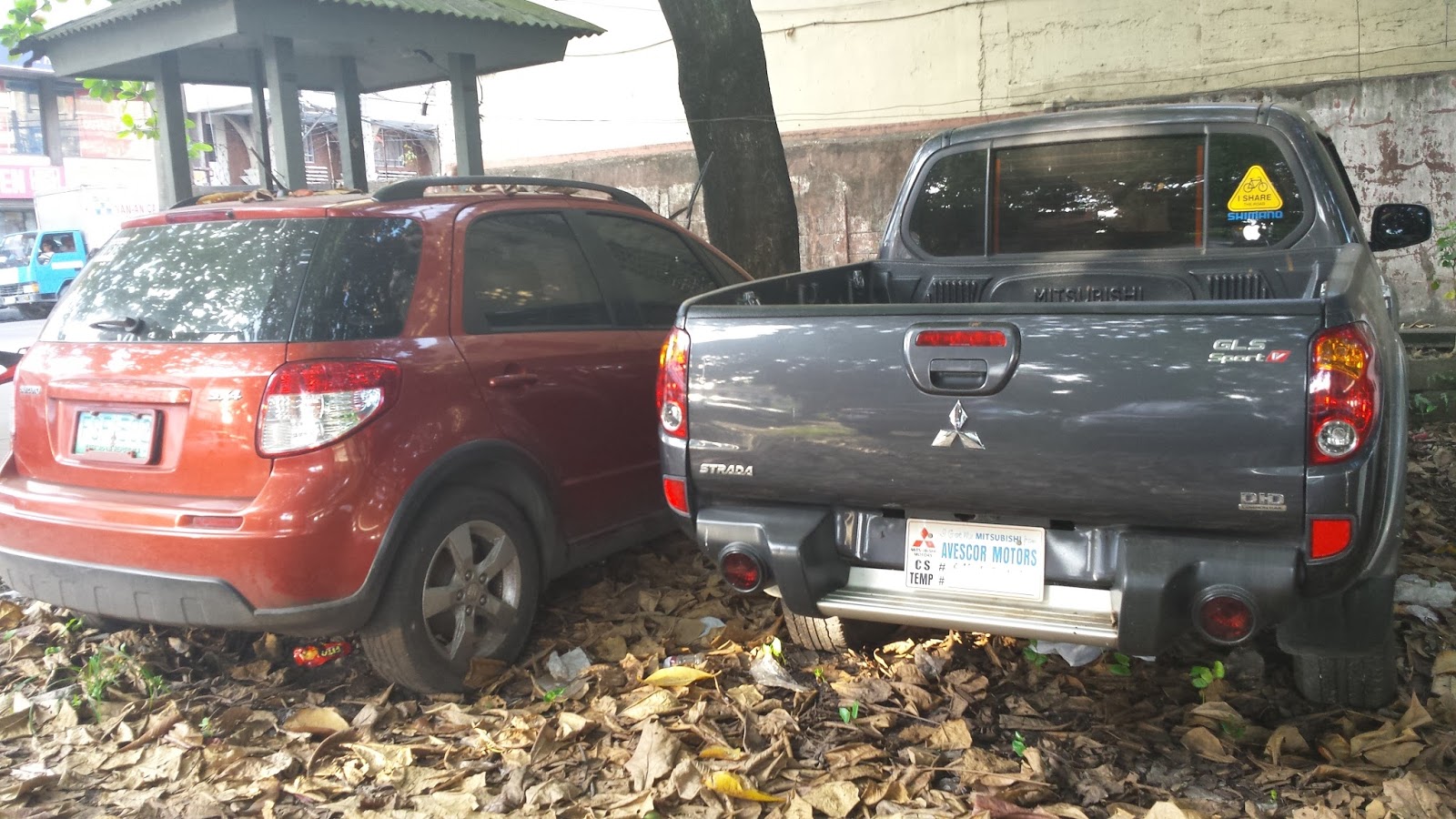
Majority of the units are latest model year vehicles, since financial institutions cannot finance vehicles older than five to seven years old. Majority of them are in varying states of condition, from the untouched to the poor ones. And most of the vehicles are sold in a "as is, where is" basis, and some do have their warranties intact (but read it properly, since some might be forfeited because of some provisions).


 |
| Majority of repossessed cars are late model vehicles, with some have no license plates |
What To Look At?
Don't do this alone, bring a trusted mechanic with you to check what's fishy with the car you are considering. Check the oil from the engine and the transmission, if they have been replenished and good as new. If possible, make kalikot or open the things that you can open (such as caps in the engine and the handles). As with buying a used car, make sure to drive it around and test every gears (some don't allow a brief test drive). Have a camera ready to take pictures of the car since some douche bag may steal some parts. Expect some inferior quality tires and dead battery, and even some interior stains. Some have been flooded or totally wrecked, so do have an eye for them and avoid. And lastly, check if the registration is named after the bank, with some incidents like a stolen vehicle record may occur.

 |
| Some repos are in tip top shape (above), while some have accidents and are in bad shape (below) |
If Something Goes Wrong
In that case, better have someone in the bank to take care of you. If there are car problems, make sure it could be remedied ahead.

Buying a repossessed car could be a happy moment or a sad day for one. The good thing is they are recent year models but the bad they could be neglected. Besides, it wouldn't hurt to look at them since who knows, you might want that car, for less.
 |
| There are some luxury cars, like this Jaguar, that you may dream of |
http://tsikot.com/forums/car-insurance-financing-auto-loans-talk-134/buying-bank-repossessed-cars-23875/
Monday, August 6, 2012
Used Car Review - Nissan Sentra Exalta (2000-2001)
Filipinos deserve nothing but the best after a long tiring day. But, do remember that it must be on a budget. And Myk Belmonte scouts around the used car land for bargains that can be had for less. So, you can now tell your friends that your car has luxury items for less cash without joining Showtime or Eat Bulaga.
2000-2001 Nissan Sentra Exalta
History
If you mention the word "luxury", lavishness and tons of money come to mind. Not all people can afford a BMW, Benz, or a Bentley (drool more) - especially in the financial and maintenance sense. Other manufacturers such as Toyota, Ford, and Volkswagen (sister brands of Lexus, Lincoln, and Audi respectively) lend their mass market vehicles and put glamorous features (such as excessive chrome, leather all around, and tons of gadgets).
Yulon Motor of Taiwan purchased 75% ownership of Nissan's newly-built assembly plant located in Santa Rosa, Laguna. Did you know that Yulon had a relationship with Nissan since 1967? Yes, they produce Nissan vehicles under license and also assembles Chrysler, Geely, GM, Mercedes Benz and Mitsubishi. Apart from vehicle assembly, the company engages in vehicle importation. They bring in Infiniti, Nissan, and Renault vehicles to Taiwan.
The Yulon acquisition had the Nissan Sentra Exalta introduced to the Philippine market in the year 2000. It was billed as the direct (and only competitor during that time) rival of the Toyota Corolla Altis 1.8. It utilized the GA16NE engine (the Sentra Super Saloon uses a different type from the GA engine family) and saw the usage of chrome and leather. This model paved way for the usage of the Exalta badge for the N13 Sentra from 2001-2003, it reverted back to simply Sentra in 2004. Variants include the simpler SLA and the fully loaded STA.
Value and Costs
The price of luxury can be had for less than a million bucks when brand new. 10 years later or so, affordable luxury can be attained for P210,000-P260,000. Nissans (in general) do have poor resale values, so these are bargains for used car buyers. You'll also encounter N13 Sentras of later age in that price range, so have a keen eye if its an original Sentra Exalta B14 you'd seek.
Electronic gadgets are a dream for one's car, but their breakdowns can cause headaches. If you're inspecting a unit, pay particular attention to these gadgets (especially in the STA variant) if they function well. The idle air control valve, mass airflow sensor, the alternator, and battery should be checked thoroughly since the gadgets put extra load for the MAF sensor and the air control valve. The rear suspension is soft due to the comfort biased nature and must be checked for weird noises that warrants a replacement. Leather is nice until they have scratches and stains. Spare some money for repairs and you'll be rewarded with a worry free journey. On the flipside, mechanical parts (most of them) are similar to other Sentra B14's.
Exterior and Interior
Not much is to be said with the exterior, since it uses the body of the B14 Sentra where it was based on. Color coded handles are standard - as opposed to the blacked ones in the lowly trim lines. The STA does have the sunroof as standard equipment. You may dismiss this variant as luxurious or tacky looking.
If there's one thing to discuss about the Sentra Exalta B14, it would the interior. Occupants receive a roomy interior but the rear is tight for six footers. Both variants receive wood accents, rear backup sensors, and sapphire starlight gauges. The SLA does have a manual transmission, and basic power amenities; the STA is paired with an automatic transmission and a laundry list of features - which includes the availability of a sunroof, 12 disc CD changer, retractable window shades, leather seating, retractable mirrors, automatic climate control, hands free system (for older Nokia phones), and a four disc braking system.
Engine
If Sentra Super Saloons use a GA16DNE engine mentioned on my Sentra B14 article, the Exalta utilizes a GA16DE 1,596cc for both SLA and STA variants. The carry 110hp at 6,000rpm and 140Nm @ 4,000rpm, almost similar to the other GA engine found on local Sentras. If the SS has the potential to speed up, the Exalta can be described as slower once you get behind the wheel. Why slow? This is because of the added heft caused by the electronic gadgets and the comfort bias rear suspension.
Driving Impressions
If you're the type who longs for the freeway or long drives, the Exalta is the perfect match. Your passengers would feel in comfort since the suspension is tuned for them, and the combo for the leather is nice. But, handling is not as agile as the EK Civic and due to the comfort priority, expect numb handling. Better avoid zigzag roads and tight curves if you want to fully utilize this car's potential as an alternative to expensive luxo sedans.
Verdict
Different people have different definitions of the word luxury. The Sentra Exalta (in B14 platform) is one wonder during its time for offering luxury features at mass market prices. Just remember that luxury items (such as gadgets) are nice to have, but break them and it would mean catastrophe. If you're not a badge snob and adventurous at a same time, why not consider the Sentra Exalta B14?
Wednesday, August 1, 2012
Used Car Review - Ford Lynx (1999-2005)
Since August is the Buwan ng Pambansang Wika, Myk Belmonte and your Ultimate Used Car Guide celebrates it by featuring vehicles produced and assembled in the Filipinos. Our first featured car for this month is a gem made by Filipinos, bet you didn't know this is exported to our ASEAN neighbors.
1999-2005 Ford Lynx
History
If in case you lived under a rock throughout your life (or six feet underground, in case you are reading from heaven that has free Wi-Fi connection), Ford had a financial stake on Mazda since the latter's financial troubles during the 1960s, and this resulted to numerous tie-up projects between Ford and Mazda. Notable vehicles developed under the union include the Ford Ranger and Mazda B Series pickup trucks, the Ford Explorer and Mazda Navajo SUVs, and the Ford Laser and the Mazda Familia sedans; with the Ford counterpart being the subject of this article.
From the Laser's inception in 1980 that spawned five versions later on, the fifth (and final) Laser was introduced internationally in 1999. Under the chassis codes of KN & KQ and using the Lynx and Tierra nameplates, it received lukewarm sales in most of established markets (the Focus is hot stuff in Europe and the Escort is loved by Americans). It continued to be sold in several countries until 2005, with the European Focus replacing it. Mazda did the same strategy that Ford had done, with the Familia/Protege sedans got succeeded by the Mazda3.
The Ford Lynx was an important vehicle for Ford Group Philippines when it was unveiled in September 1999. The Lynx (they've decided to ditch the Laser badge to avoid associations with the 80s wonder) is exported to our South East Asian neighbors and the practice continued until 2005. Throughout its selling date, it was only - unless you count the Lincoln Town Car that was sold briefly - Ford's passenger car entry in the country. It got the axe in the middle of 2005 in favor of the Focus that was sold worldwide. From introduction to early 2002, GSi and Ghia variants paired with a Mazda sourced engine were the only choices; an update in 2002 had the LSi 1.3 version and the RS trim (which will be reviewed separately) completed the Lynx line-up in late 2003. A Centennial Edition was made available but in limited quantities.
Value and Costs
In general, Ford vehicles get low resale values in the Philippines due to their gas guzzling nature (this is technically not true). With that in line, you can have a recent model Lynx in the price ranges of P150,000-P320,000. There are no mechanical changes done, so I advise buyers to focus on the overall condition and standard features available. Modified and abused units are a big no-no, so steer away from these.
To tell the truth, cost of maintaining a Ford is not a pain to the wallet. Parts of original, replacement, and third party are accessible, but with this being a discontinued model, expect to wait for some components to arrive. If you're eying for a Ghia variant; check if the power folding side mirrors function, the sunroof operates properly (standard among 2002 and later models), and if the CD changer works. MAF Sensors are sensitive, especially if the previous owner placed after market air filters or gas saving devices.
Exterior and Interior
Describing the Lynx can be either stately looking or executed in a tacky fashion. Pre-2002 models do have 15 inch silver coated rims that can look ugly if it has scratches. While the front portion of the vehicle looks decent to the eyes, the rear area doesn't jive with the rest of the body. 1999-2001 vehicles possess a banana shaped tail lamps that can elicit comments of "awkward looking", this has been remedied in a 2002 update.
The luxury car theme continues inside, with the Lynx having a luxury focused interior that even put the Japanese competition into shame. Silver-lined interior trims are standard among earlier models, bronze shaded ones replaced the silver ones in 2002. And the Ghia trim had items reserved for higher priced vehicles that come as standard. Care to know? A 6-disc CD changer (the iPod and MP3 killed this), a moonroof (just pray it doesn't rain), and leather seating (useless if you live in Tugueguerao). The driver seat padding is much better on post 2002 units, while passengers have ample room in the rear.
Engine
You'll be shocked when I say this to you, both 1.3 and 1.6 engines standard in the Lynx are supplied by Mazda. This is not a typo, both of these engines also powered the Mazda Familia sold during the 90s. From launch, the only option is a 1,597cc ZM-DE that has 118hp at 5,500rpm and 148Nm at 4,000rpm. For the lower market, a 1,323cc B3-ME is offered with 85hp at 6,000rpm and 112Nm at 4,000rpm. Do take note the B3 engine delivers fuel via an electronic fuel injected way. Both engines are rev happy, even without valve timing technology.
Driving Impressions
At low speeds, the Lynx behaves well - something unusual for the class. Credit this to the sound insulation, which Ford did its job well. If you've gotten one with an automatic transmission, the transmission knows how to downshift, but the usual shift shock (common among matics) is there. It handles well but not as outstanding as the one in the EK Honda Civic. It does the job well done, but definitely not outstanding in a way.
Verdict
Having a car that has been afflicted with low resale values can be an advantage to the used car buyer. The Ford Lynx is a bargain if you prioritize price and a number of standard amenities. It does not standout in a way but delivers the goods. And if you are nationalistic, driving a Lynx is also one way to show appreciation for the Filipino people who built it.
Monday, July 30, 2012
Car Features - Taxicabs Across the Philippines
BAGUIO
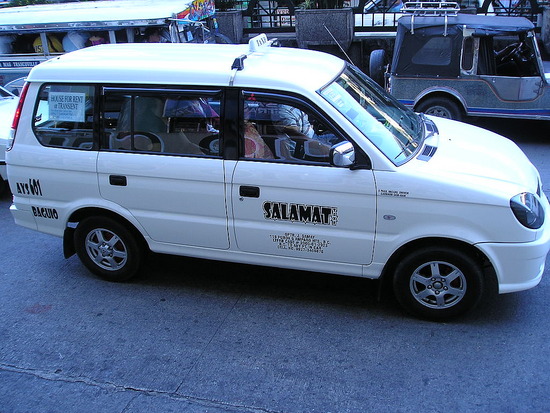
Based from available photos, high raised vehicles are dominant in the Summer Capital's streets. AUV's such as the Mitsubishi Adventure, Isuzu Crosswind, Toyota Revo, and Toyota Avanza rule the streets. On the other hand, sedans such as the good old Toyota Corolla and Kia Pride are not to be forgotten. If you think you can haul the clan in an Adventure taxi, the rear jump seats are folded since they are metered, not the popular Mega taxis. And in that case, five people (driver included) can hop in. The good thing is that, flag down rate is P25 and drivers are friendly.
 |
| Mitsubishi Adventure taxi |
 |
| Kia Pride taxi with Tamaraw FX cabs in the background |
ANGELES, PAMPANGA
With a trip back in 2009 as well as a story from a friend who lives there, taxicabs are not metered and you'll have to bargain. You could see them in the Balibago area, SM Clark, Diosdado Macapagal International Airport, and in the friendship gate. Common cabs include Love Life Corollas, N13 Sentras (when it was the base model of the Exalta series), and Pizza Lancers (most of them are GLX models from 2000-2002). In total, taking a cab as what one travel site said, cabbies are notorious for not using their meters and prices can get high.
LEGAZPI, ALBAY
You might not know taxicabs existed in Legazpi City, albeit in small numbers. Taxi services can be had courtesy of Early Riser and Taxi Cool. If Manila cabbies prefer the Vios, Bicolano drivers choose the Avanza due to the road conditions present in Bicol, since they tend to bring tourists to Donsol, Sorsogon, Daraga, Albay (Mount. Mayon), and other places. Hyundai Accents are also being used due to the fact that it uses diesel.
 |
Two Hyundai Accent taxis by Early Riser |
ILOILO CITY
This bustling city in the island of Panay has a variety of taxicabs. While most of them are white in color, they're more brighter thanks to the usage of light colors when it comes on writing their names and other related information. A variety of taxis are used such as the Toyota Vios, Corolla, and Avanza, Hyundai Accent, Nissan Sentra, Kia Rio, and Chevrolet Aveo. If you're in a hurry, you can hail one outside of any major mall (SM, Robinsons, Gaisano, Marymart, etc).
 |
| Vios taxis queuing up outside Iloilo International Airport |
 |
| Hyundai Accent taxi outside SM City Iloilo |
 |
| A Toyota Avanza taxicab |
BACOLOD CITY
In the City of Smiles, you can hail a cab almost anywhere. Common taxicabs include the Toyota Vios, Avanza, and Corolla, Nissan Sentra, Hyundai Accent, Kia Rio, and Chevrolet Aveo. The same comment goes for Iloilo, they use bright colors in their names, numbers, and other related information. One company has their fleet in blue and it would be an interesting sight.
 |
| A Chevrolet Aveo taxicab |
 |
| A Corolla taxicab parked |
 |
| This is what I'm referring to, a blue taxicab. |
CEBU
Arriving at the busy Mactan-Cebu International Airport will lead you to ride what is familiar in Metro Manila, yellow airport taxis or Coupon taxis in short. However, staying in the city? You'll have to hail a cab and they will let you in. Beware, taxis are in shortage whenever a huge event happens in the city. The good thing is that, a fruit salad of taxis of various makes and models which include (as I saw these back in 2011) surplus units of Kia Sephia and Avella and local Hyundai Matrixes. Their top indicates if its occupied or vacant, which is a good thing especially at night.
 |
| Corolla taxicab in downtown Cebu |
 |
| Kia Rio taxicab |
 |
| Toyota Vios taxicab outside Cebu City |
DUMAGUETE CITY
This quiet city has one taxi company in operation, Arari Negros Taxi or ANT for short. If you want a cab, better ask for their number once you arrive since you'll have to flag a tricycle. Just a fact: Cebu's KEN Taxi used to operate back in the 90s but pulled out due to financial woes.
 |
| Hyundai Sonata (imported ones from South Korea) taxis by ANT |
TACLOBAN CITY
Only one company operates a fleet of Avanza taxicabs in the city, to think that no Toyota sales outlet exist in the province of Leyte. A browse from Google Images that these taxicabs are operated by Michael J. Lhuiller - the one person who mans the pawnshop and fresh farm chicken selling. Another cheap alternative is the open Spyder taxis, which could be hailed anywhere.
 |
| The pawnshop magnate has a pool of taxicabs |
 |
| An Avanza taxi roaming the streets of Tacloban |
 |
| A Spyder taxicab |
CAGAYAN DE ORO
If you plan to sell your Corolla Altis, you might want to sell it to Cagayan de Oro since 90% (an estimate based on videos and pictures) are, you guessed it right, Corolla Altises. Rumor has it that if you ride an Altis taxi, you are sosyal while local cabbies are itching to drive one. The rest of the 10% are a mix of Nissan Sentras, Kia Avellas, Toyota Avanzas, Toyota Vioses and Toyota Corollas. Besides, a taxi driver told me previously that "bawat driver gusto makapagmaneho ng Altis".
 |
| A line of Corolla Altises (photo from Michael Ray) |
 |
| A Toyota Corolla Altis taxi |
 |
| Maiba naman tayo, Nissan Sentra taxi |
DAVAO CITY
Tired of the monotonous white taxicabs roaming around Metro Manila? Travel down to Davao City and you'll be surprised with the various colors of taxis roaming the streets. You'll see white, yellow, silver, blue, orange, even black and violet! There are a variety of brands and makes in Davao, and even the most friendliest drivers in the country. As I write this, a certain company now accepts debit cards and ATM cards as payments. You might not know that their cabs have GPS and TV screens in the rear, it is not the scariest place to hop in a cab. In the past, non-aircon taxis exist but they are phased out in recent years.
 |
| Black Nissan Sentra taxicab |
 |
| A taxicab traversing a flooded street |
 |
| Lines of Kia Avella and Rio cabs |
 |
| Blue Toyota Vios taxi with LED light on top |
 |
| Maligaya taxi cab |
 |
| A non-aircon taxi. Notice the open windows |
 |
| Purple taxicab |
 |
| Two taxicabs in downtown Davao |
All photos courtesy of the following sources listed below. Photos are owned by respective owners.
http://blog.travelpod.com/travel-photo/feisoar/4/1306472110/taxi.jpg/tpod.html
http://article.wn.com/view/2009/10/13/All_roads_to_Baguio_now_open_but_limited/
http://www.skyscrapercity.com/showthread.php?t=175804&pp=20&page=1920&langid=5
http://members.virtualtourist.com/m/p/m/1bd253/
http://irecoholic1925.blogspot.com/2011/04/iloilo-international-airport.html
http://bacolodcity.olx.com.ph/rmc-taxi-iid-309068796
http://www.skyscrapercity.com/showthread.php?p=81009532
http://global-drifter.blogspot.com/2011/04/bacolod-city.html
http://cebucity.olx.com.ph/taxi-for-sale-iid-21372605
http://www.affordablecebu.com/load/cebu_travel_guide/colon_st_cebu_city/4-1-0-64
http://www.white-beach-bungalows.com/how_to_get_there3.htm
http://www.skyscrapercity.com/showthread.php?p=70093631
http://www.taclobanhotels.com/TRAVEL-GUIDE.htm
http://atrandomness.blogspot.com/2008/06/taxiii.html
http://members.virtualtourist.com/m/p/m/1905b1/
http://tsikot.com/gallery/showphoto.php/photo/13969
http://www.skyscrapercity.com/showthread.php?t=730054&page=2395
http://davaocitybybattad.blogspot.com/2012/06/united-colors-of-davao-taxis.html
http://www.skyscrapercity.com/showthread.php?t=592070&page=42
http://nickilo.wordpress.com/2008/08/02/where-is-my-non-aircon-taxi/
http://anythingdavao.blogspot.com/2011/10/davaos-colored-taxis.html
Tuesday, July 24, 2012
Used Car Review Compilation (7/24/2012 Update)
NOW UPDATED WITH LINKS TO NEW ARTICLES. LIST WOULD BE UPDATED ONCE IN A MONTH.
UPDATE AS OF JULY 24, 2012.
I've started creating used car reviews since December 2011 in a weekly basis and it would be very hard for several of my blog visitors to wade around my blogsite. So, to simplify your life, I would be compiling all used car reviews done by me and this list would be updated once a month and you'll see the possible vehicles that I would be making a used car review in the future, and the existing ones. You may also suggest a car that you want to see in this page by commenting. Do take note I would not be reviewing all used vehicles locally, only those that are desirable as a used car purchase, or cars that demand as collectors items. All existing models are not included.
So, here are the cars. Links are provided for available articles.
Monday, July 23, 2012
Used Car Review - Kia Rio (2006-2011)
Filipinos love Koreanovelas, K-Pop songs, and Korean cars. Myk Belmonte finds a K-pop wonder that delivers the goods in a simple way, but without the looks of Yoona of Girls Generation (or SNSD if you're a rabid fan) or Sungmin of Super Junior, that's if you're after going to point A to Z with minimal fuss.
2006-2011 Kia Rio
Plus with random K-Pop video (scroll it down) on the end of this article!
History
Let's admit it, back in the 90s, Korean cars - such as Kia, Hyundai, and Daewoo - are popular, but with people who cannot afford wheels made by Japs. With time, Korean cars reached their popularity peak and are no longer relegated to second tier status. Their appeal reached to everyone, just like Korean dramas that are dubbed in Filipino (with some fans wanting to learn the language). Now, Korean cars have a spot on a buyer's shopping list.
The Kia Rio - with the chassis code of DC - went under the radar in year 2000, and this vehicle replaced both the Pride and Avella; the two vehicles were not the cars for having 'aegyo' poses (or cute poses), so the Rio had soft but unconventional styling. After five years being on sale and five years of Endless Love being on air, the Rio was redesigned and improved in 2005. It did target budget conscious motorists and saw a progress in quality and exterior design.
Columbian Autocar Corporation brought the JB Rio in 2006 with both sedan and hatchback styles available. It was the time that the distributor was 'hwaiting~!' (a slang which meant to cheer up or fight for something) to traumatized owners of Korean vehicles and even to the general public. The hatchback body never took off and dropped off the line up in 2008. The Rio found success with taxi operators due to its low price and roomy interior. Face lifted in late 2009 and sold until 2011, with the UB Rio replacing it in 2012. Trim lines available are the loaded EX (in both sedan and hatch configurations) and the taxi driver popular LX, which was added in the lineup during the MMC.
Value and Costs
For second hand vehicle buyers, low resale values when new translate to low prices, which is an advantage to their part. If you're a 'netizen' scouring online ads or an old schooler who picks up a copy of Car Finder or the Sunday edition of Manila Bulletin (and check its famed classified ads section), a 2006-2011 Rio can be obtained between P270,000-P420,000. No mechanical changes were done, so I advise buyers to focus with the vehicle condition. Some units from 2009 have the remainder of their warranties, have a lookout for these.
Cost of maintaining one is not expensive as you think, with support of third party parts suppliers and Kia's wide dealership network (if the unit you've purchased had the balance of the warranty) is there. Since the Rio is commonly used as a city car, inspect the unit thoroughly for wear and tear that are visible or not. If possible, avoid ex-taxi units; these could be a pain for prospective owners.
Exterior and Interior
The Rio was one of the recipients of Kia's evolution in the brand's design philosophy. You may describe it as elegant looking (especially if matched with Red or Blue) or plain looking. If you know the members of U-Kiss one by one, Rio owners will point out some exterior changes involve the blacked-out bumper sections are replaced with body color ones, and the signature tiger nose grille was applied. With the not-so-striking exterior, you won't see this car being used in Boys Over Flowers.
You and I would say that the Rio has a spartan interior. The interior was done in black motif with the absence of airbags (and even an ABS braking system) and a common 1-DIN audio head due to cost reasons. The Rio offers decent room with a reasonable space for passenger's elbows and hips at the rear. Surprisingly, the boot is spacious, thanks to its deep and low portions. Opting for the LX - which is the basic trim - would mean the deprivation of power windows and its side mirrors and door handles are blacked out.
Engine
Propelling this vehicle is a 1,389cc engine with 93hp at 6,00rpm and 125Nm at 4,700rpm. This has the ability of reaching triple digit speeds despite the lack of variable valve-timing technology that is present in competitors during its time. You can weave through traffic through a broad range of revs, which you can relieve your City Hunter car chase scene fantasies.
Driving Impressions
If you're after something simple to drive, the Rio is one good candidate. One niggle for newbie drivers is the manual transmission shifter, with the reverse gear located beside the first gear (with access via a pull-up ring below the shift knob) that takes time to master. Expect your passengers to find the ride firm with the suspension setup relegating to cushion them, but one must not expect a plush ride for a budget car.
Verdict
Music groups like 2NE1 and DBSK and Korean dramas are widespread and can be heard or seen anywhere. The Kia Rio is one vehicle that is common for a reason. And if you need is a basic car that can bring you to F.T Island (this is a boy band, not some place in Subic) or anywhere without the flash, this car merits consideration with low prices to boot. There is no need to fear for reliability problems that early Korean cars faced.
Monday, July 16, 2012
Used Car Review - Mitsubishi Lancer (1993-1999)
In the market for a cheap beater? Myk Belmonte finds a 90s wonder that would fit the bill. Old as it may be, but let's go back and review the car's merits. If you've found memories with this car, we're not responsible for the tears on your face
1993-1999 Mitsubishi Lancer
Thanks to user mikehunter1980 of tsikot.com for supplying some data!
History
Bet you didn't know that unlike the Corolla and Civic, the Lancer is sold worldwide with a number of names under Mitsubishi and different brands. Care to know? These were the Mitsubishi Colt Lancer, Carisma, Lancer Fortis, Galant Fortis and Mirage; Dodge/Plymouth Colt; Chrysler Lancer and Vallant Lancer; Eagle Summit; Hindustan Lancer; and Soueast Lioncel. Sorry if I get you confused with a bewildering number of names. The Lancer was introduced in 1973 and has since reached its ninth generation which was introduced in 2007.
Introduced in 1991, the sixth generation Lancer was made available to world markets. This generation saw the huge gap and difference between the Lancer and Mirage, with both of them having different sheetmetal. Various body styles were offered to consumers that includes a sedan, coupe, and a wagon. Numerous engine configurations are available; which includes carburetor and fuel injected 4-cylinders, turbo, diesel, and a 1.6 V6. It was the basis of the Proton Wira, a rebadged sixth generation Lancer.
Filipinos usually call Lancers by the shape of their lamps (usually the tail lamps) or their body style. The 1975 -1978 Lancer was the L-type, the 1979-1989 Lancer was popularly known as the box-type Lancer, the 1989-1992 Lancer was nicknamed as the 'singkit' or 'pusa', the 1996-2002 Lancer was called as the 'pizza', and the 1993-1996 Lancer (the featured vehicle for this week) are usually termed as the 'itlog' or 'hotdog'. Enough of tail lamp design analysis; this generation of Lancer was introduced in 1993 and with the introduction of the 'pizza' Lancer, the GLi and GLXi trim lines were dropped and the EL became the EX (which does not have anything to do with today's model). The EX variant stayed in the line-up until 1999, with no direct replacement from the 'pizza family'.
Value and Costs
A glance at classified ads would reveal that Lancer 'itlog' prices are between P85,000-P150,000. This covers the EL, EX, GLi, and GLXi variants in different states and varying years. There are units that are set-up to resemble the Evo I, II, and III from the outside and carries a different engine; and not to forget, ex-taxi units, since the Lancer 'itlog' was once a cabbies favorite. Do avoid the two if you encounter one.
With the vehicle selling well back then, parts are widespread (from the original, replacement, to the third party) and their prices are affordable. If there is one thing to be mindful of when considering this vehicle, it would be the suspension. Lancers (and most Mitsubishi sedans) during the 90s had the notorious suspension problems - or kalampag in local parlance. Fixing the suspension system is not inexpensive and must be done before purchasing one.
Exterior and Interior
You can say that the Lancer's exterior design is either luxurious or does not standout. If you're considering a GLXi model, it does come with chrome roof drip and belt moldings as well as outside door handles. However, the latter may look out of sync with the rest of the body color. EL and EX trims had blacked out door handles while the GLi makes do with body colored ones.
The interior is a plastic affair, with good pieces and bad ones mixing together. The dashboard (if not removed by the previous owner) looks well assembled. If there is one gripe with the controls, they feel brittle and would seem to crack for those who have a habit of pressing buttons harder. Tachometers are not present in the EL and EX, while power steering for the GLi was not offered until September 1995, and power mirrors became standard with Lancer GLXi models built from November 1994 onwards.
Engine
The usual menu among sedans sold in the 90s are a cuisine of engines with either carburetor or fuel injected flavors. Both EL and EX have a 4G13 that has 73hp; GLi models do have the 4G15 with 92hp as standard; and for the GLXi, a 4G92A with 114hp at 6,00rpm and 134Nm at 4,500rpm. It may not have any strength on the lower side or on the higher side of the torque spectrum, but it does offer the compromise one might seek whether for the city or the highway drives.
Driving Impressions
A fact: the Lancer was developed as a compact car to fill the gap between the Minica and the Galant, it ended up creating Mitsubishi's heritage in the world of motor sports. Its success meant that their cars are meant to assure owners and buyers that Mitsubishi products can withstand various driving conditions. With that in mind, the Lancer itlog is one reliable drive. The multi-link suspension setup can hold up the worst road conditions. Its engine may not be class leading but it returns spirited driving performance.
Verdict
If the requirement is a "cheap all-around vehicle", the Lancer itlog merits consideration. It may not be the first car to ring a bell on your lists but this one deserves a look. With maintaining one not causing a hole on your wallet and plenty of examples to look at. Just have patience on vehicle hunting and you'll reap the rewards in the end.
Friday, July 13, 2012
Wildcard Pick of the Month - Hyundai Matrix (2003-2007)
This month, we'll be having our first wildcard pick. The thrill is that a surprise vehicle (published on a surprise date) gets the spotlight. But do remember this one will happen every two months, so watch out this September and November for our wildcard pick of the month.
If you are looking for a practical vehicle (sedans are not included on the list) that can be bought for less, you're in luck for this month. And as Myk Belmonte launches the wildcard pick of the month, the featured vehicle fits the description above.
2003-2007 Hyundai Matrix
History
There is a market for buyers who pick style over substance, and the trade-off is functionality in exchange for vehicle styling. If you've purchased a Toyota Echo Verso (or Fun Cargo in Cagayan and some parts of Mindanao), Suzuki SX4 (I'm discussing the hatch version), Honda City GD, Fiat Multipla (if you live in Europe), or a Hyundai Matrix; reward yourself that you've got a highly functional vehicle that can perform all-duty tasks. As they say, beauty is just skin deep.
The Matrix (or Lavita in some East Asian countries) was introduced in 2001 to replace the Hyundai Santamo (which is essentially the italicized H's version of the Mitsubishi Chariot/Spacewagon) that has been due for a replacement. The weird looking exterior was designed by car design firm Pininfarina, which crafted designs for various high end automobile manufacturers. It stayed in production until 2010 without any exterior design changes, with the Europe exclusive ix20 filling in the void left behind.
While synonymous for Starex vans during the early 2000s, Hyundai Asia Resources Incorporated took the courage to launch the Matrix in 2003. It had rants and raves from the media to ordinary consumers; some praised the interior flexibility offered while some gave a thumb down for its odd ball looks. It initially had a gasoline engine that could be paired with both stick shift and automatic transmissions with a 2005 update had a diesel power plant under the hood. With Matrix production shifting to Turkey (all units are built in South Korea) and it would be costly to import directly, Hyundai had no choice but to discontinue it in 2007.
Value and Costs
If you are looking for a cheap daily car with the practicality of a hatchback, you're in luck. Prices of used Matrixes ranging from 2003 to 2007 would be usually priced between P200,000-P300,000. This is definitely an advantage if you find the sizes of the Aveo (definitely your last choice) and Jazz (the obvious first choice) too small for your needs. A diesel engine wrapped in a flexible interior with a shell at low prices? It's a bargain!
The Matrix is a trouble free daily car, with major problems not reported on popular automotive forums. Parts are shared with several Hyundai vehicles, but with the Matrix being a discontinued model, expect for some components to have long waiting periods. Be cautious if you're checking one with a diesel engine under the hood for faulty fuel injectors and tail pipe problems.
Exterior and Interior
This Italian design can be dismissed as weird or wonderful, with comments more on the former. But the oddly proportioned shape translates to a functional interior. The side windows on the rear portion do not go with the flow together with the rest of the window sills.
Having a weird taste can mean a good thing, with the occupants being treated to a roomy interior and good all-around visibility. Other odd items include the center placed instrument gauges and the location of the warning lights stalk, which is placed above the steering wheel. But the "dare to be different" theme ends here, with the other controls located in their usual spots.
Engine
Unlike the Hyundai's main and direct competitors, a gasoline engine and a diesel power plant was offered in the market. The gasoline option is a G4GR 1,599cc (from the Beta engine family) that has 103hp at 6,000rpm and 141Nm at 4,900rpm while consumers who opt for the diesel will get a U (from the U-Line group of engines) 1,491cc which carries 102hp at 4,000rpm and 235Nm at 2,000rpm. The gasoline burner has adequate power in low speeds but push this hard, the engine feels strained which results to low fuel consumption figures. The engine of choice is the diesel; it has the capacity of motivating this 1,370kg body in a fast but frugal manner. Not to forget, it won't need frequent trips to the pumps.
Driving Impressions
Thanks to its McPherson and multilink suspension setup, the Matrix can attack corners with safety and stability. You'll feel safe driving one (due to the suspension settings, not of a "hidden" stability or traction control, but the Matrix does not have them) but forget sporty driving, this does not inspire the likes whose idols are Vettel and Hamilton. On the tightest of turns, the Hyundai screams for more grip no thanks to its puny 14 inch wheels. Braking is decent, despite the absence of ABS brakes.
Verdict
If you don't mind the funny exterior design (not all are like Kim Kardashian when it comes to be choosy in designs), the Matrix is one good choice if all you need is a daily commuter car. You have to grow with the weird proportions, but you'll be rewarded with its interior flexibility. With prices that can get you a garden variety sedan, this is one fish that stands out in the sea.
Monday, July 9, 2012
Used Car Review - Daihatsu Feroza (1989-1999)
There are cars that have a following, and most of them are out of production. Myk Belmonte hunts such one car that a group of people love. The advise? Test drive one and you'll know why it gathered a following among a certain group of people. Off-road enthusiasts, prepare to drool for this one.
1989-1999 Daihatsu Feroza
History
Sold worldwide under the names of Rocky, Feroza, Sportrak, Rugger, and Fourtrak; the Daihatsu Feroza was a mini SUV (smaller than your mother's CR-V) that had off road capacities without the bulk and consuming little space. This is a niche market that only a few of these compact SUV's with that capacity are sold currently.
Manufactured between 1984 to 2002 for worldwide consumption and assembled in different parts of the globe. It provided excellent beaten path driving dynamics at a low price, it was derided for being crude and bare, but true off-road aficionados won't complain. It was replaced by the Terios in some world markets.
Asian Carmakers Corporation - the assembler and distributor of Daihatsu vehicles back then - introduced the Feroza to the Filipino market back in 1989. It was a novelty vehicle, indeed. With the ability of transforming an ordinary two-door SUV into an open top roader. Available for nearly 10 years straight, it saw success within a certain market, and with the demise of Daihatsu in the Philippines, it would be such a sight to see Terios units on the road.
Value and Costs
You'll be surprised that acquiring a Feroza is affordable, with units costing between P90,000-P180,000. Since this SUV remained unchanged throughout its selling life, it would be a diligent choice to focus on vehicle condition rather than interior features. Go with a unit that had been used as a daily commuter than something beat up and driven mostly off the road
There are some myths that Daihatsu parts are hard to find. I'll tell the truth, this is not true; with several parts that are shared with some Toyota vehicles. Be mindful about the carburetor if it functions properly, the tires must be as specified and rust must not be visible. Other than these pet peeves, maintaining one wont drain your resources.
Exterior and Interior
Curves that afflict modern compact SUV's are absent in the Feroza, in place of these are boxy angles. Adding to its macho stance is the rectangular grille work bordered by square headlamps, and the fender flares that add some assertive attitude. What others may not know (or may know) that the thick B-pillar works as a rollover protection bar. The white roof panel and rear passenger canopy can be removed if one fancies top down motoring.
The interior is bare looking, but those travelling the beaten path wouldn't mind. Front passenger space is good but the rear is best left inhabited due to legroom issues. The seats may appear thin but they assure that they have adequate support and they are adjustable.
Engine
You may say that the carburetor metered HD-C 1,589cc engine with 94hp at 5,700rpm and 127Nm at 4,800rpm won't do justice with this perky bugger. But, this HD engine (as what Daihatsu fans refer to) has 16 valves instead of eight - typical of carbureted motors, which could be explained that it generates more power and torque than ones with half the valves. It drives effortlessly, body weight and bulk notwithstanding.
Driving Impressions
Ingress and egress is easy, despite of the high ground clearance. The distance between its under chassis and the ground is adequate if one longs for off-road excursions. Driving along, acceleration is a bit fast and easy, and handling is pointy, credit this to the recirculating-ball steering system. It handles the rough stuff with aplomb despite the short wheelbase. You think the ride is harsh? No, you'll even feel comfortable even when the tough goes rough.
Verdict
This mini SUV that can handle the worst that nature throws in can be obtained at less the price when new. Parts availability is not a liability nowadays with an advent of similar Toyota parts that can be used. If your daily route involves unpaved roads, want a weekend getaway warrior, or an off-road aficionado; add this mini ute to your shopping list.
Subscribe to:
Posts (Atom)