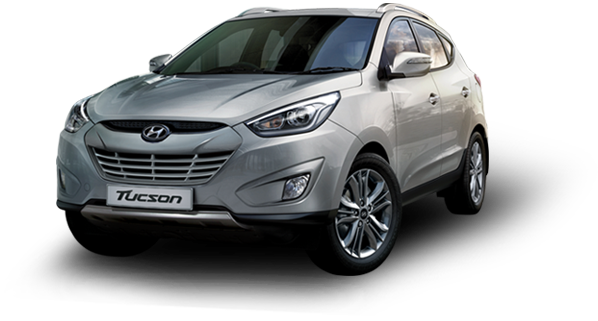
2010-2015 Hyundai Tucson
The Good: Fully equipped at the price, powerful diesel engine
The Bad: Refinement is not good, interior trim quality
The Say: An improvement which is still hampered by bad manners.
Go For: 2.0 GL Diesel
Avoid: 2.4
Price Range: P460,000-P930,000
Our Rating: ***
Full Review: Used Car Review - Hyundai Tucson (2010-2015)
Latest vehicle profile: Hyundai Tucson
See the different versions of this vehicle:
2010-2013
2014-2015
Showing posts with label Hyundai Tucson. Show all posts
Monday, October 3, 2016
Monday, December 21, 2015
Used Car Review - Hyundai Tucson (2010-2015)
Did this vehicle changed a brand forever? Let Myk Belmonte delve more here.
2010-2015 Hyundai Tucson
History
There was a point in time Korean vehicles were considered inferior and third rate, much like Japanese cars during the early years. However, things had changed especially when these manufacturers invested heavily in quality improvement, design, manufacturing process, and long term research and had reaped the rewards. While these brands no longer offer a 10 year/100,000 mile (whichever comes first) warranty, these vehicles are on par with other competitors especially accolades and awards left and right are being given.
Quoting Toyota engineer Saeki Yoshikazu, who primarily developed the RAV4 who said "I test drove Tucson ix. Even I think Tucson ix is a very good vehicle. It is very stylish too." Developed under project LM, it took three years and 280 billion won for this vehicle to come to fruition. This vehicle is a recipient of Hyundai's fluidic sculpture design, which also saw usage in other Hyundais.
While the first generation Tucson sold well (due to low pricing and the availability of a diesel powerplant), the second generation brought Hyundai in a lot of factors to new heights. This vehicle saw a long waiting list and overtaken rivals in sales charts but saw the decline of service which owners had complained, the last one is better checked on Philippine automotive forums and you'll get what I mean. While other models in their stable experienced falling sales, this one stayed afloat. It was discontinued in the middle of the year and replaced by the third generation model. Numerous models were available throughout the years which were: basic GL, uplevel GLS, R for diesels, Premium as top end for early versions, and Limited (only few were brought in 2013, carrying amenities reserved for Premium models but carrying a 2.0 engine).
Value and Costs
With the launch of the third generation model, expect prices to plummet down further which means the cheapest unit you can find for a 2010 model would cost you P550,000 while recently purchased models in the P1,100,000 range. Scout for a 2011 and later purchased unit to utilize the five year warranty set by the distributor. There are a bevy of models available for each buyer's requirement, so do your research carefully.
Although the previous generation model is reliable, this doesn't mean the second generation model will. Common problems among second generation Tucsons involve the inhibitor switch, which viewing in the gauge area on where the transmission is slotted disappears and the thermistor coil in the air-conditioning unit in which the compressor is shut off the air-con does not turn on. Since the Tucson is a volume seller, parts are available in your suking Korean parts specialist shop.
Exterior and Interior
This is where Hyundai did their homework well, the exterior styling. Based from the Fluidic Sculpture in which the design was heavily inspired from nature, Bold styling that makes the car flawless in execution without going overboard is one feature that comes standard. A 2014 update gave the Tucson gunmetal wheels, rear LED tail lights, front daytime running lights, and some models have a revised grille later on. Limited and Premium models obtain a panoramic sunroof and larger wheels (the 2.4 4x4 model sold in 2010 to 2013 has this also) but was discontinued later on. GL gasoline units don't get side mirror signal repeaters, while others have it.
Going inside reveals an interior which is a mixed bag: build quality is top notch and design looked like it was designed professionally, some materials feel cheap which is a step back. Ergonomics inside is fine, though some front seat occupants may bang their knees at the dashboard. GLS models and above gain fabric/leather or leather seating, while GL gasoline units only have a driver's airbag as standard. Limited, Premium, and 2.4 GLS gets cruise control, push button start (latter does not have the two items, though), stability control, and hill brake control. 2014 and above models get a touchscreen monitor with DVD and GPS ready capability which is for GLS and GL diesel units only.
Engine
Three gasoline and a sole diesel engine were available for Filipino consumers back when the Tucson is available. First on the list is the Theta II 2.0 carrying 165hp at 6,200rpm and 197Nm at 4,600rpm which was standard for 2010 to 2013 models. An update in 2014 got an upgrade to the NU 2.0 that has 156hp at 6,200rpm and 192Nm at 4,600rpm, which seems odd as it got less but let's deal with it later. Another petrol powerplant offered is from the Theta II engine family which disposes 2.4 liters that comes with 176hp at 6,000rpm and 226Nm at 4,000rpm. Lastly, a diesel in the name of the R 2.0 which possess 174hp at 4,000rpm and 392Nm at 1,800-2,500rpm which is only paired with 4WD. Let us deal on how these perform: the Theta 2.0 gasoline is decent enough to carry the bulk of the body while the NU which replaced it is far better in terms of performance and fuel consumption. The 2.4 gasoline is fast but with just a few units available on sale, we wouldn't bother with this one. Getting the diesel will reward you with gobs of power and smooth acceleration at the expense of fuel consumption (only the 2.0 gasoline is less fuel friendly by some kilometer per liter). In detail, we would be choosing the 2.0 NU for all around purpose but our pick goes to the diesel, despite the standard 4WD and the difference in fuel consumption between the petrol is only small.
Driving Impressions
You are not going to buy this car to go on drag races, you better look elsewhere. The Tucson comes with electric power steering which makes steering on tight turns easy and increase fuel consumption though it acts somewhat numb in certain situations. Going to the driving experience: body roll is less pronounced but the suspension is choppy, making the ride experience a bit firm for some people. Another annoyance is the limited visibility of the vehicle, no thanks to a design which favored fuel consumption over practicality.
Verdict
Everyone knows the first generation Tucson is a dependable appliance, it sparkles at several aspects but known brands overshadow it. The second generation model upped the ante in a lot of factors but with some faults that come with it. We all know there is no perfect car, but the Tucson made Hyundai recognized more.
2010-2015 Hyundai Tucson
History
There was a point in time Korean vehicles were considered inferior and third rate, much like Japanese cars during the early years. However, things had changed especially when these manufacturers invested heavily in quality improvement, design, manufacturing process, and long term research and had reaped the rewards. While these brands no longer offer a 10 year/100,000 mile (whichever comes first) warranty, these vehicles are on par with other competitors especially accolades and awards left and right are being given.
Quoting Toyota engineer Saeki Yoshikazu, who primarily developed the RAV4 who said "I test drove Tucson ix. Even I think Tucson ix is a very good vehicle. It is very stylish too." Developed under project LM, it took three years and 280 billion won for this vehicle to come to fruition. This vehicle is a recipient of Hyundai's fluidic sculpture design, which also saw usage in other Hyundais.
While the first generation Tucson sold well (due to low pricing and the availability of a diesel powerplant), the second generation brought Hyundai in a lot of factors to new heights. This vehicle saw a long waiting list and overtaken rivals in sales charts but saw the decline of service which owners had complained, the last one is better checked on Philippine automotive forums and you'll get what I mean. While other models in their stable experienced falling sales, this one stayed afloat. It was discontinued in the middle of the year and replaced by the third generation model. Numerous models were available throughout the years which were: basic GL, uplevel GLS, R for diesels, Premium as top end for early versions, and Limited (only few were brought in 2013, carrying amenities reserved for Premium models but carrying a 2.0 engine).
Value and Costs
With the launch of the third generation model, expect prices to plummet down further which means the cheapest unit you can find for a 2010 model would cost you P550,000 while recently purchased models in the P1,100,000 range. Scout for a 2011 and later purchased unit to utilize the five year warranty set by the distributor. There are a bevy of models available for each buyer's requirement, so do your research carefully.
Although the previous generation model is reliable, this doesn't mean the second generation model will. Common problems among second generation Tucsons involve the inhibitor switch, which viewing in the gauge area on where the transmission is slotted disappears and the thermistor coil in the air-conditioning unit in which the compressor is shut off the air-con does not turn on. Since the Tucson is a volume seller, parts are available in your suking Korean parts specialist shop.
Exterior and Interior
This is where Hyundai did their homework well, the exterior styling. Based from the Fluidic Sculpture in which the design was heavily inspired from nature, Bold styling that makes the car flawless in execution without going overboard is one feature that comes standard. A 2014 update gave the Tucson gunmetal wheels, rear LED tail lights, front daytime running lights, and some models have a revised grille later on. Limited and Premium models obtain a panoramic sunroof and larger wheels (the 2.4 4x4 model sold in 2010 to 2013 has this also) but was discontinued later on. GL gasoline units don't get side mirror signal repeaters, while others have it.
Going inside reveals an interior which is a mixed bag: build quality is top notch and design looked like it was designed professionally, some materials feel cheap which is a step back. Ergonomics inside is fine, though some front seat occupants may bang their knees at the dashboard. GLS models and above gain fabric/leather or leather seating, while GL gasoline units only have a driver's airbag as standard. Limited, Premium, and 2.4 GLS gets cruise control, push button start (latter does not have the two items, though), stability control, and hill brake control. 2014 and above models get a touchscreen monitor with DVD and GPS ready capability which is for GLS and GL diesel units only.
Engine
Three gasoline and a sole diesel engine were available for Filipino consumers back when the Tucson is available. First on the list is the Theta II 2.0 carrying 165hp at 6,200rpm and 197Nm at 4,600rpm which was standard for 2010 to 2013 models. An update in 2014 got an upgrade to the NU 2.0 that has 156hp at 6,200rpm and 192Nm at 4,600rpm, which seems odd as it got less but let's deal with it later. Another petrol powerplant offered is from the Theta II engine family which disposes 2.4 liters that comes with 176hp at 6,000rpm and 226Nm at 4,000rpm. Lastly, a diesel in the name of the R 2.0 which possess 174hp at 4,000rpm and 392Nm at 1,800-2,500rpm which is only paired with 4WD. Let us deal on how these perform: the Theta 2.0 gasoline is decent enough to carry the bulk of the body while the NU which replaced it is far better in terms of performance and fuel consumption. The 2.4 gasoline is fast but with just a few units available on sale, we wouldn't bother with this one. Getting the diesel will reward you with gobs of power and smooth acceleration at the expense of fuel consumption (only the 2.0 gasoline is less fuel friendly by some kilometer per liter). In detail, we would be choosing the 2.0 NU for all around purpose but our pick goes to the diesel, despite the standard 4WD and the difference in fuel consumption between the petrol is only small.
Driving Impressions
You are not going to buy this car to go on drag races, you better look elsewhere. The Tucson comes with electric power steering which makes steering on tight turns easy and increase fuel consumption though it acts somewhat numb in certain situations. Going to the driving experience: body roll is less pronounced but the suspension is choppy, making the ride experience a bit firm for some people. Another annoyance is the limited visibility of the vehicle, no thanks to a design which favored fuel consumption over practicality.
Verdict
Everyone knows the first generation Tucson is a dependable appliance, it sparkles at several aspects but known brands overshadow it. The second generation model upped the ante in a lot of factors but with some faults that come with it. We all know there is no perfect car, but the Tucson made Hyundai recognized more.
Thursday, September 10, 2015
Car Profiles - Hyundai Tucson
The Good: Refinement and everything else is excellent
The Bad: Now became pricey
Price Range: P1,158,000-P1,715,000
Our Rating: ****
Last Update: March 2, 2018
Monday, March 16, 2015
Hyundai Tucson - Generation 2.1 (2010-2013)
HYUNDAI TUCSON (2010-2013)
Based on the ix-onic concept car, the Tucson's engines (both gasoline and diesel) and safety features were upgraded. This generation brought in the Premium variants reserved for the 2.4 and diesel models.
Friday, March 13, 2015
Hyundai Tucson - Generation 1 (2005-2009)
HYUNDAI TUCSON (2005-2009)
With the Santa Fe growing up in size, the Tucson is now Hyundai's compact SUV and the first Sport Ute by the Korean brand to be offered locally. Initially, a diesel 4WD was made available which was followed by a diesel 2WD and a gasoline model. A monotone color option is available for the base gasoline and Spec Up models are available for the gasoline and diesel 2WD.
Saturday, August 16, 2014
Hyundai Tucson - Generation 2.2 (2014-2015)
HYUNDAI TUCSON (2014-2015)
Wednesday, March 13, 2013
Car Profiles - Hyundai Tucson (2010-2015)
2010-2015 Hyundai Tucson
The Good: Fully equipped at the price, powerful diesel engine
The Bad: Refinement is not good, interior trim quality
The Say: An improvement which is still hampered by bad manners.
Go For: 2.0 GL Diesel
Avoid: 2.4
Price Range: P730,000-P1,300,000
Our Rating: ***
Related Review: Used Car Review - Hyundai Tucson (2010-2015)
Latest vehicle profile: Hyundai Tucson
See the different versions of this vehicle:
2010-2013
2014-2015
The Good: Fully equipped at the price, powerful diesel engine
The Bad: Refinement is not good, interior trim quality
The Say: An improvement which is still hampered by bad manners.
Go For: 2.0 GL Diesel
Avoid: 2.4
Price Range: P730,000-P1,300,000
Our Rating: ***
Related Review: Used Car Review - Hyundai Tucson (2010-2015)
Latest vehicle profile: Hyundai Tucson
See the different versions of this vehicle:
2010-2013
2014-2015
Thursday, January 3, 2013
Car Profiles - Hyundai Tucson (2005-2009)
2005-2009 Hyundai Tucson
The Good: Practicality due to diesel engine and space
The Bad: Interior looks cheap
The Say: If practicality and value are needed, then look no further.
Go For: 2.0 Diesel 2WD
Avoid: 2.0 Gasoline
Price Range: P360,000-P780,000
Our Rating: ***
Related Review: Used Car Review - Hyundai Tucson (2005-2009)
Latest vehicle profile: Hyundai Tucson
See the different versions of this vehicle:
2005-2009
The Good: Practicality due to diesel engine and space
The Bad: Interior looks cheap
The Say: If practicality and value are needed, then look no further.
Go For: 2.0 Diesel 2WD
Avoid: 2.0 Gasoline
Price Range: P360,000-P780,000
Our Rating: ***
Related Review: Used Car Review - Hyundai Tucson (2005-2009)
Latest vehicle profile: Hyundai Tucson
See the different versions of this vehicle:
2005-2009
Tuesday, January 31, 2012
Used Car Review - Hyundai Tucson (2005-2009)
The Korean car industry was a discussion topic inside comedy bars (operated by car enthusiasts and their talents are Vice Ganda, if this person was a car enthusiast) and beer sessions. Slowly but surely, they have improved when it comes to vehicle quality and they have been now favorites of every motorist around the world. Myk Belmonte asses this popular vehicle.
2005-2009 Hyundai Tucson
History
Back in 1998, South Korea was severely hit by the East Asian Financial Crisis. Daewoo was bought out by General Motors and Kia was purchased by Hyundai with the three lettered brand declaring bankruptcy. With the marriage of Hyundai and Kia, their union produced high quality models and even shared platforms with each other. If Hyundai had the Sonata, Kia does have their Optima; Kia had their Carnival/Sedona and on its second generation, it produced the Hyundai Entourage which flopped and now out of production. The second generation Kia Sportage was an advantage of Hyundai for developing the Tucson under the Hyundai Elantra's platform.
Introduced in 2004 and marketed worldwide until 2009 (Brazil still has this generation of Tucson until today), the Tucson enjoyed immense success with its affordable pricing, decent standard equipment that undercuts the established competition, and with something that no one had ever wondered, the desirability of the Hyundai badge.
Hyundai Asia Resources Incorporated released the Tucson in 2005 starting with the 2.0 CRDi 4x2 variant, it added a 2.0 gasoline 4x2 model the following year, and completing the Tucson line with the 2.0 CRDi 4x4 variant made available in 2007. It was an entry ticket for motorists desiring a capacity of a SUV with the driving dynamics of a sedan priced under a million bucks. The nameplate was so salable that even its second generation model generated a long line, probably a first from Hyundai in the Philippines.
Value and Costs
Pre-owned first generation Tucson's doed have prices in the range of P440,000-P800,000. Do take note that prices vary from the engines residing under their hood, overall condition of the vehicle, and even the year model (as I scout used car classified ads some are priced as low as P440,000!). There are Tucson's that do have black side bumpers and moldings, so do check them if it comes standard, especially if there are dents and scratches.
One advantage of the popularity of this compact SUV is the abundance of parts, ranging from the original, to the replacement ones. Maintenance is on the easy side but if one is considering a 4x4 variant, check if the 4x4 system functions properly and with the diesel variants, if oil changes are done to prevent the CRDi engine to commit suicide.
Exterior and Interior
The Tucson may not resemble anything similar from the land of Super Junior and Girls Generation. It has design cues straight from European automobiles. Try removing the italicized "H" badge, and you'll now have an SUV from a German sports car brand, although shrunken in size (from L to XS, if there is any such thing). Wide windows are a treat for driver visibility and roof rails come standard.
It may be a compact SUV but it treats the occupants with a roomy cabin. Headroom is one good advantage for those with basketball player like height. The cargo area can adequately store anything (from an LCD TV Monitor to a dismantled coffee table) in that area. The transmission shifter is located upfront, leaving more room in the middle. The glass hatch can be opened separately and making cargo loading easy, unlike the first gen. CRV.
Engine
Two engine variants paired to two drivetrain options. Gasoline variants do have the 1,975cc Beta II engine that has 142hp at 6,000rpm and 186Nm at 4,500rpm. On the other hand, diesel powered Tucson's possess the 1,991cc CRDi I4 engine which lurks 112hp at 4,000rpm and 239Nm at 1,800-2,500rpm. The diesel variants may seem to be conservatively powered on paper, but it does the job fine. The lone gasoline option are adequately powered but not as fuel efficient as the diesel ones (obviously).
Driving Impressions
Thanks to the platform shared with the Hyundai Elantra, this SUV is a comfortable one, albeit the ride can get firm sometimes. Short drivers would like to add the first generation Tucson to their shopping lists because it provides a good commanding view (thanks to its high seating position) and excellent all around visibility - which is a pro for those spending most of their time in parking buildings of SM and Ayala Malls.
Verdict
There are some good but valid reasons for not holding the trait of being picky and having badge snob issues. The first generation Tucson is definitely not for everyone, but those wanting a recent model SUV at a lower price, badging issues be damned, this is a good option and value. And not to forget, one of the fuel efficient choices out there, thanks to the CRDi engine choice.
2005-2009 Hyundai Tucson
History
Back in 1998, South Korea was severely hit by the East Asian Financial Crisis. Daewoo was bought out by General Motors and Kia was purchased by Hyundai with the three lettered brand declaring bankruptcy. With the marriage of Hyundai and Kia, their union produced high quality models and even shared platforms with each other. If Hyundai had the Sonata, Kia does have their Optima; Kia had their Carnival/Sedona and on its second generation, it produced the Hyundai Entourage which flopped and now out of production. The second generation Kia Sportage was an advantage of Hyundai for developing the Tucson under the Hyundai Elantra's platform.
Introduced in 2004 and marketed worldwide until 2009 (Brazil still has this generation of Tucson until today), the Tucson enjoyed immense success with its affordable pricing, decent standard equipment that undercuts the established competition, and with something that no one had ever wondered, the desirability of the Hyundai badge.
Hyundai Asia Resources Incorporated released the Tucson in 2005 starting with the 2.0 CRDi 4x2 variant, it added a 2.0 gasoline 4x2 model the following year, and completing the Tucson line with the 2.0 CRDi 4x4 variant made available in 2007. It was an entry ticket for motorists desiring a capacity of a SUV with the driving dynamics of a sedan priced under a million bucks. The nameplate was so salable that even its second generation model generated a long line, probably a first from Hyundai in the Philippines.
Value and Costs
Pre-owned first generation Tucson's doed have prices in the range of P440,000-P800,000. Do take note that prices vary from the engines residing under their hood, overall condition of the vehicle, and even the year model (as I scout used car classified ads some are priced as low as P440,000!). There are Tucson's that do have black side bumpers and moldings, so do check them if it comes standard, especially if there are dents and scratches.
One advantage of the popularity of this compact SUV is the abundance of parts, ranging from the original, to the replacement ones. Maintenance is on the easy side but if one is considering a 4x4 variant, check if the 4x4 system functions properly and with the diesel variants, if oil changes are done to prevent the CRDi engine to commit suicide.
Exterior and Interior
The Tucson may not resemble anything similar from the land of Super Junior and Girls Generation. It has design cues straight from European automobiles. Try removing the italicized "H" badge, and you'll now have an SUV from a German sports car brand, although shrunken in size (from L to XS, if there is any such thing). Wide windows are a treat for driver visibility and roof rails come standard.
It may be a compact SUV but it treats the occupants with a roomy cabin. Headroom is one good advantage for those with basketball player like height. The cargo area can adequately store anything (from an LCD TV Monitor to a dismantled coffee table) in that area. The transmission shifter is located upfront, leaving more room in the middle. The glass hatch can be opened separately and making cargo loading easy, unlike the first gen. CRV.
Engine
Two engine variants paired to two drivetrain options. Gasoline variants do have the 1,975cc Beta II engine that has 142hp at 6,000rpm and 186Nm at 4,500rpm. On the other hand, diesel powered Tucson's possess the 1,991cc CRDi I4 engine which lurks 112hp at 4,000rpm and 239Nm at 1,800-2,500rpm. The diesel variants may seem to be conservatively powered on paper, but it does the job fine. The lone gasoline option are adequately powered but not as fuel efficient as the diesel ones (obviously).
Driving Impressions
Thanks to the platform shared with the Hyundai Elantra, this SUV is a comfortable one, albeit the ride can get firm sometimes. Short drivers would like to add the first generation Tucson to their shopping lists because it provides a good commanding view (thanks to its high seating position) and excellent all around visibility - which is a pro for those spending most of their time in parking buildings of SM and Ayala Malls.
Verdict
There are some good but valid reasons for not holding the trait of being picky and having badge snob issues. The first generation Tucson is definitely not for everyone, but those wanting a recent model SUV at a lower price, badging issues be damned, this is a good option and value. And not to forget, one of the fuel efficient choices out there, thanks to the CRDi engine choice.
Subscribe to:
Posts (Atom)